


The Robe That Was Never Meant to Leave School Grounds
Eton College’s change robes – those long, structured garments worn by boys moving between houses and sports facilities – were designed for function, not fashion. Thick enough to cut the English cold, formal enough to respect tradition, and cut with a deliberate looseness that prioritized coverage over silhouette. For over a century, they existed in the background of one of Britain’s most photographed institutions, barely worth a second glance. Now, that exact silhouette is turning up in the studios of independent luxury designers and the mood boards of creative directors who specialize in elevated loungewear.
The garment itself is surprisingly specific: a mid-calf or full-length robe with deep front pockets, a wide lapel collar that sits closer to a coat than a dressing gown, a single tie or button closure, and fabric weight that reads as intentional rather than casual. It is not a bathrobe. It is not a kimono. It occupies a category of its own – somewhere between a morning coat and indoor outerwear.
That in-between quality is exactly why it works now.

Why This Silhouette Is Landing in Luxury Loungewear
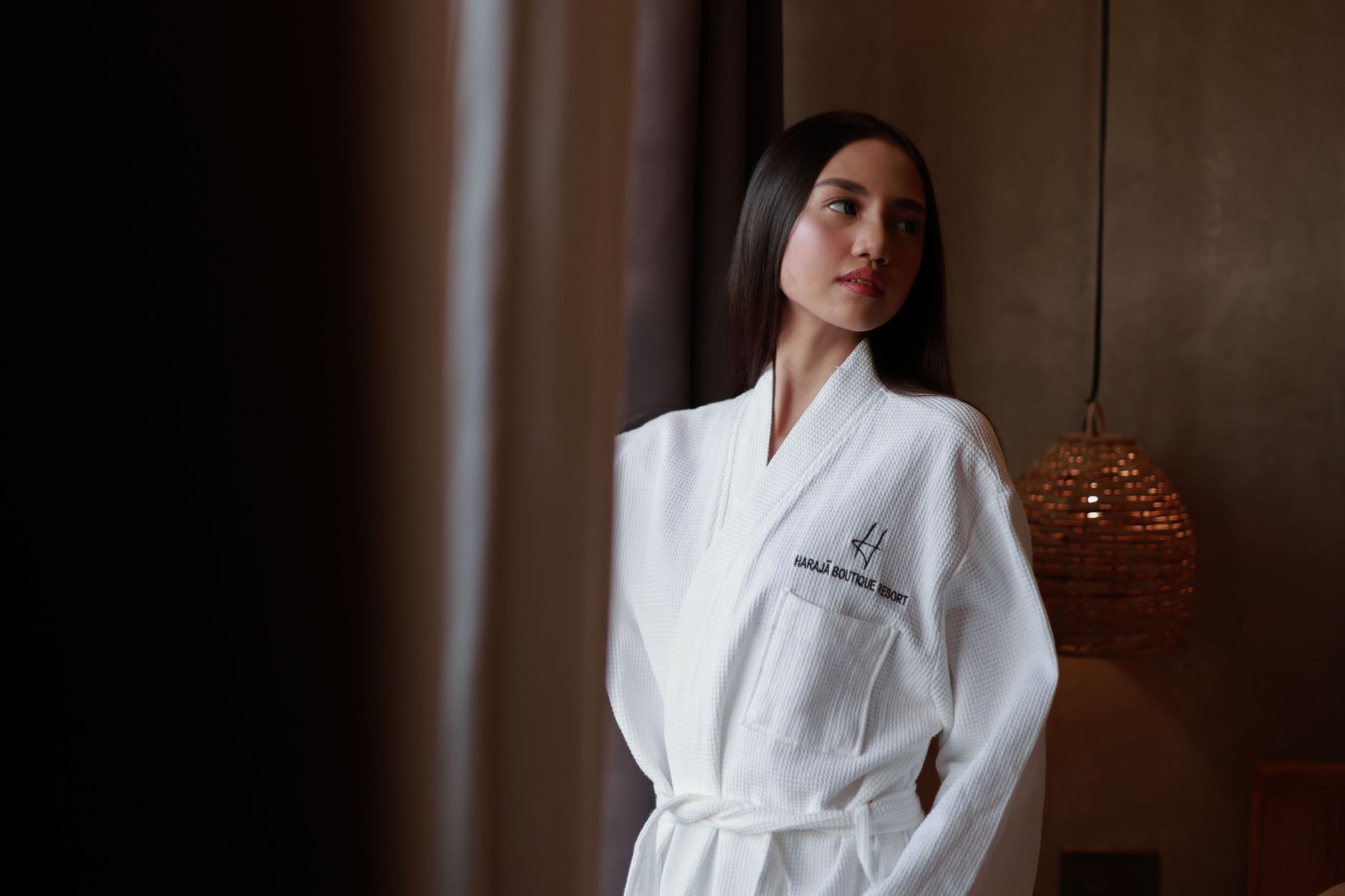
Luxury loungewear has been on a slow architectural correction for several years. The category overcorrected in the direction of softness – everything became cashmere-adjacent, draped, slightly formless. Consumers with real spending power started looking for loungewear that had the ease of staying home but the structure of going out. The Eton change robe silhouette answers that directly. Its collar holds shape. Its length creates presence. Wearing one does not look like giving up; it looks like making a choice.
The fabrics being used in this new wave of interpretation are where the real design intelligence shows. Heavy cotton twills, boiled wool blends, double-faced cashmere, and even technical fleece with a matte finish are all being cut into this shape. The original Eton robe was almost always navy or black, and that restraint in color carries over into the luxury versions – deep burgundy, forest green, charcoal, ivory. The palette signals that this is not novelty loungewear but an alternative to formal outerwear for people who spend significant time at home and want that time to feel considered.
There is also a broader appetite for British institutional references in luxury fashion right now. Collegiate and school uniform details – from the sock garters of Eton’s formal dress code to the heavy cotton of rowing kit – are being mined for their specificity and their associations with craft, tradition, and a certain unselfconscious confidence. The change robe fits neatly into that lineage.

How Designers Are Adapting the Cut Without Losing the Point
The challenge with adapting any institutional garment is that if you change too much, you lose the thing that made it interesting. The Eton change robe’s appeal is its deliberate plainness – the fact that it was never designed to flatter, only to function. Designers working with this reference are being careful to preserve the structural bones while refining the details. The collar gets a sharper press. The tie belt is replaced with a broader sash in a matching fabric. The pockets are kept deep because deep pockets in loungewear are genuinely useful and persistently rare.
Length is being treated as a design statement rather than a default. Some interpretations push the hem to the ankle for maximum coverage and drama, reading almost like a house coat from a 1930s film. Others stop at the knee, which opens the robe to warmer months and gives it a lighter, more relaxed register. A smaller number of designers are exploring a cropped version that sits at the hip, though this risks losing the proportional authority that makes the original silhouette so distinct.
The interior construction is equally deliberate in the best versions. A quilted lining at the back panel adds warmth without bulk. Structured shoulder seams prevent the robe from collapsing inward on the body, which is the single biggest difference between a well-made change robe and a generic bathrobe that simply happens to be heavy. When the shoulder holds, the whole garment reads differently – more intentional, less lazy.
A Garment That Asks Something Back of the Person Wearing It
Most loungewear makes no demands. The Eton change robe, even in its luxury interpretations, asks the wearer to stand up straight – not because it restricts movement, but because its structure rewards good posture in the way that a well-cut coat does. That is a genuinely rare quality in anything designed to be worn inside, and it is the detail that will either make this a durable category in luxury fashion or keep it a niche reference appreciated mostly by people who already know what a change robe is.