


The Equestrian Detail That Athleisure Designers Are Borrowing
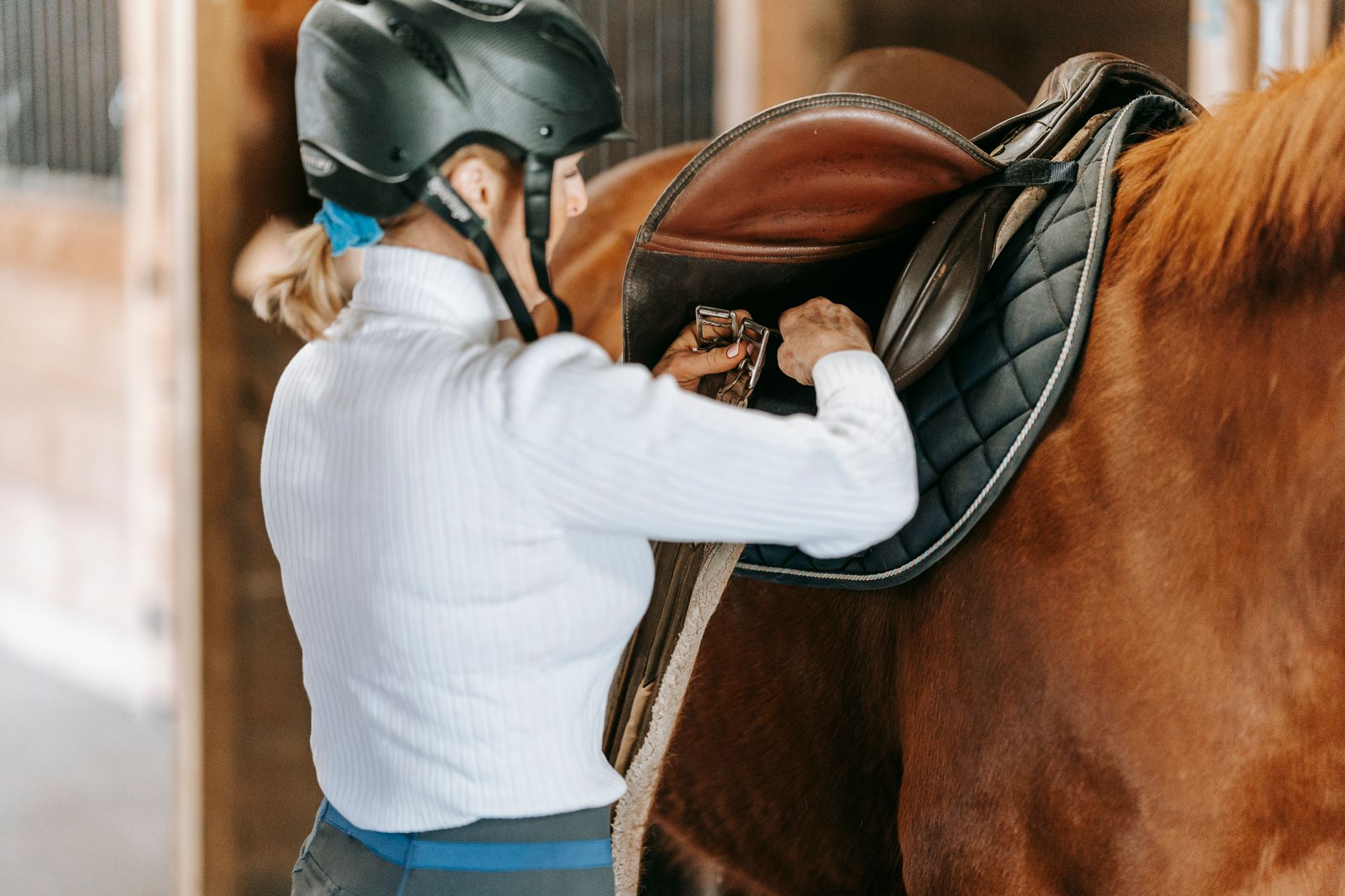
Saddle pad binding tape – the narrow, tightly woven fabric strip that frames the edges of polo club saddle pads – has spent decades in stables and competition arenas, doing the unglamorous work of protecting leather saddles and preventing pad slippage. It is utilitarian by design, engineered for friction, tension, and repeated washing. So the fact that this specific construction is now appearing along the waistbands of high-end athleisure is not an accident of aesthetics. It is a deliberate design choice driven by both function and the continued appetite for equestrian codes in contemporary sportswear.
The migration of equestrian hardware and construction details into fashion is well-documented at this point – stirrup straps, bridle leather, and jodhpur silhouettes have all had their moments. But binding tape sits in a more subtle category. It does not announce itself. It finishes an edge, adds structural reinforcement, and creates a clean visual line. Applied to athleisure waistbands, it solves problems that traditional ribbed or elastic waistbands have always struggled with: rolling, distortion after wear, and the soft, shapeless edge that telegraphs a garment’s cheapness even when the rest of it is well made.

What Binding Tape Actually Does to a Waistband
Standard athleisure waistbands are constructed from a folded piece of stretch fabric, often bonded or sewn to a wide elastic band. They are comfortable, they are fast to produce, and they degrade predictably – the outer fabric loosens, the elastic fatigues, and the waistband begins to fold or curl at the top edge after enough wash cycles. Saddle pad binding tape, by contrast, is typically a tightly woven cotton or polyester twill cut on the straight grain and applied flat around a perimeter edge. It does not stretch in the way knit waistband fabric does, which means it holds its shape under pressure without relying on elasticity alone.
When this principle is applied to an athleisure waistband, the tape acts as a structural frame rather than a decorative trim. Designers are using it to cap the top edge of waistbands, creating a firm, defined line that resists rolling during movement. Some iterations wrap the tape around both the outer and inner face of the waistband edge, sandwiching the fabric and providing a finished seam that holds its position through repeated wear. The result is a waistband that behaves more like tailored sportswear than conventional activewear – it sits flat against the body without digging in, and it keeps its silhouette wash after wash.
The tactile quality of the tape matters too. Saddle pad binding is typically woven with enough body to feel substantive against the hand, and that density translates well to the skin-adjacent experience of a waistband. It does not feel like trim placed on top of a garment. It feels like the garment has an internal logic, a sense that every edge was considered. That is the distinction athleisure brands have been working toward as the category matures – moving from performance basics to garments that read as designed rather than manufactured.
Colorways follow equestrian convention too. The tape appears most often in contrast colors – navy on white, hunter green on grey, camel on black – pulled directly from the palette of polo club stable gear. These are not fashion colors in the conventional seasonal sense. They are institutional, almost heraldic, and they give athleisure pieces a visual grammar that feels more aligned with heritage sportswear than with trend-driven activewear. A pair of leggings with camel binding tape at the waistband reads differently from a pair finished in tonal ribbing. The association with tradition is immediate.
Why Athleisure Is Looking to Equestrian Construction Right Now
Athleisure as a category expanded quickly and democratized fast. The construction shortcuts that allowed brands to produce at scale are now visible to a consumer base that has spent years living in these garments. Waistband quality, in particular, has become a point of comparison and complaint. Binding tape offers a construction solution that is familiar to garment makers – it is not a new technology – but its application to athleisure borrows credibility from the equestrian world, where durability standards are set by actual outdoor use rather than by marketing language.
Equestrian sport also carries the kind of quiet status signaling that a certain segment of the athleisure market actively seeks. Polo club aesthetic does not announce itself loudly. It operates through material choice, construction detail, and silhouette rather than through logos or graphics. Binding tape sits perfectly within that register. It says something to the person who recognizes it and says nothing to the person who does not – which is exactly the kind of coded luxury that has replaced overt branding in premium sportswear. The detail is the signal.
How the Trend Is Moving Through the Market
The binding tape waistband is currently most visible in the upper tier of the athleisure market – the price points where construction quality is used as a differentiator. Small independent activewear labels working in limited runs have been among the earliest adopters, partly because applying binding tape by hand or semi-industrial machine suits smaller-scale production better than mass-manufacturing processes that prioritize speed. At that scale, the tape’s equestrian reference is often explicit in the brand’s storytelling, connecting the construction directly to polo and dressage aesthetics.
The detail is beginning to move downstream, though. Larger activewear brands looking to add construction interest without redesigning entire silhouettes can apply binding tape to existing waistband patterns with relatively modest changes to their production workflow. The tape itself is inexpensive; the value it adds is perceptual rather than material. A standard legging with a bound waistband edge photographs differently, sits differently on the body, and holds up differently over time – three factors that drive both initial purchase decisions and long-term brand loyalty in a saturated category.
The styling possibilities extend the trend’s reach beyond strictly athletic contexts. A legging or wide-leg jogger with a crisp bound waistband in contrast tape works as well tucked under a blazer as it does paired with a training top. That cross-context wearability is what athleisure has always promised, but binding tape actually delivers it through construction rather than through styling aspiration. The waistband does not collapse when the jacket is removed. It holds its position whether the wearer is at a stable, a coffee shop, or a reformer class – which is, when you consider where polo club dressing has always lived, exactly the right audience.

The Construction Detail That Changes the Garment’s Whole Character
What makes binding tape genuinely interesting as a waistband application is that it changes the garment’s category associations without changing its silhouette. The legging remains a legging. The jogger remains a jogger. But the tape at the waist pulls the piece into a different conversation – one about craftsmanship, about equestrian heritage, about the kind of sportswear that exists outside seasonal trend cycles. That is a difficult effect to achieve with fabric choice or colorway alone, and it is why the detail is getting attention from designers who are tired of working within athleisure’s existing visual vocabulary.
The more interesting question is whether binding tape remains a premium signal once larger brands fully adopt it, or whether the construction detail retains its equestrian credibility regardless of where it appears. Saddle pad binding exists as a standard in a world where garments are tested against mud, sweat, and pressure – not against quarterly sales targets. That origin is either the detail’s lasting authority, or the thing that gets lost entirely once it clears the stable gate.