


When Kayaking Infrastructure Becomes Fashion Hardware
The cockpit rim of a flat water kayak is not designed with aesthetics in mind. It exists to create a watertight seal between the paddler’s spray skirt and the boat hull – a functional oval of reinforced plastic or composite material built to withstand tension, flex, and repetitive stress. That description, it turns out, reads almost identically to the engineering brief for a structured bag frame. Fashion has noticed.
A growing number of independent bag designers and accessories labels are borrowing the cockpit rim’s geometry – that specific ovoid rigidity, the lip-and-channel profile, the way it distributes load around a perimeter rather than concentrating it at corner points – and applying it to handbag openings, tote frames, and even the internal architecture of backpack panels. The result is a quietly expanding category of structured bags that look nothing like sporting goods but owe their backbone entirely to watersport engineering.


The Engineering Logic Behind the Crossover
A kayak cockpit rim solves a specific problem: it needs to hold its shape under lateral compression while remaining light enough not to affect the boat’s performance. Designers working in performance composites – carbon fiber, fiberglass-reinforced nylon, high-density polyethylene – have spent decades refining this balance. The rim’s oval profile spreads stress evenly, which is why it doesn’t crack or deform when a paddler drops their full body weight onto it during an awkward wet entry. That same stress-distribution logic is exactly what a structured tote needs when carrying a laptop, water bottle, and three days of accumulated receipts.
Traditional bag frames – the kind found in doctor bags, structured satchels, and classic top-handle designs – rely on internal metal rods, rigid interlining, or sewn boning to maintain shape. These methods work, but they add weight and often create stiff, unforgiving silhouettes. The cockpit rim approach is different because the rigidity lives at the perimeter, not throughout the entire body. This means the bag walls can remain soft and pliable while the opening holds its form – a combination that has been difficult to achieve with conventional millinery wire or flat steel framing.
Why Independent Designers Are Moving First
Larger accessories houses tend to develop hardware in-house or through long-established suppliers with proprietary tooling. The cockpit rim is an off-the-shelf industrial component, which makes it immediately accessible to smaller studios without the capital to commission custom metal foundry work. A designer working out of a shared production space can order kayak rims in bulk from marine supply wholesalers, sand them, coat them, and integrate them into bag constructions without waiting on a manufacturer relationship to develop.
Cost is part of it, but material honesty is the other part. There is a current appetite among a certain design-conscious consumer for bags that are visibly structural – where the engineering is readable from the outside rather than hidden under lining and interfacing. A cockpit rim at a bag’s mouth says exactly what it is doing. It makes no decorative pretense.


How the Silhouette Is Evolving in Practice
The most direct application keeps the rim at the top opening, functioning like an oversized clasp frame but without a hinge. The bag hangs from the rim’s edge rather than from conventional handle attachment points stitched into the body – which changes the drape entirely. Leather or canvas falls away from the rim’s perimeter in a way that reads almost architectural, with the opening maintaining its oval shape regardless of how much – or how little – is packed inside. Some designers are treating the exposed rim edge as a design detail, leaving the composite material raw or applying powder coating in colors that contrast sharply with the bag body.
More experimental interpretations are using the rim mid-body, essentially dividing a tall bag into an upper and lower chamber. The rim acts as an internal shelf that the bag material is stitched to, creating a visible band around the bag’s exterior – a structural seam that isn’t decorative but reads as one. This approach borrows from the way a kayak’s deck joins its hull, and the visual language carries that industrial joint directly into the finished object.
Backpack designers are taking a different approach, using the cockpit rim’s profile to create a rigid back panel that sits away from the wearer’s spine, creating airflow channels without requiring the elaborate foam channel systems that performance outdoor brands use. The rim’s natural curvature – built to match the human hip-to-chest profile in a seated paddler – turns out to approximate a back panel contour reasonably well, which has less to do with design genius and more to do with the fact that both applications are ultimately fitting around a human torso.
Color choices in this emerging category are tracking away from the bright safety tones of kayaking – no high-visibility yellows or rescue oranges – and toward the muted utilitarian palette that has defined accessories design for several seasons: raw composites left in their natural gray or black, waxed canvas in olive and clay tones, hardware finished in oxidized metals. The cockpit rim’s sporting origin becomes a material reference rather than a stylistic one, which is precisely what allows it to operate across contexts without the wearer looking like they’ve repurposed a boat.

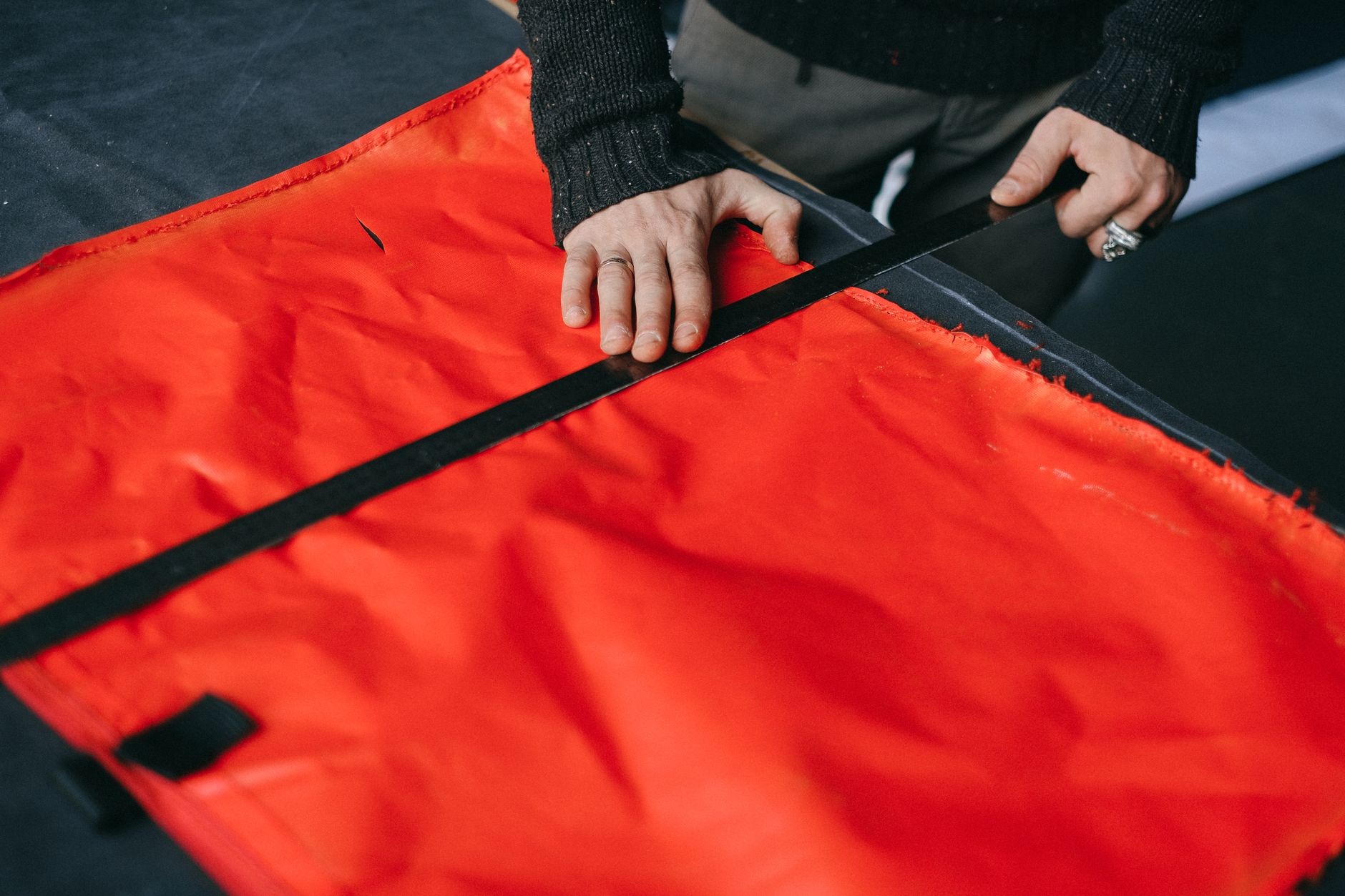
What makes this trajectory harder to dismiss as a novelty is the structural credibility sitting underneath it. Kayak cockpit rims are tested against conditions that no handbag will ever face – cold water immersion, UV degradation, repeated impact loading. A component that survives white-water paddling seasons without deforming is, by any measure, overbuilt for carrying groceries or a Wednesday afternoon’s work documents. That built-in excess of durability is exactly what makes it interesting to designers who are tired of bags that lose their shape after six months of daily use. The question now is whether the larger accessories market will follow the independent studios, or whether it will wait for a version of this that arrives pre-sanitized through a major house’s hardware catalog.
Frequently Asked Questions
What is a flat water kayak cockpit rim?
It is the reinforced oval lip around a kayak’s cockpit opening, engineered to create a watertight seal and distribute stress evenly around its perimeter.
How are kayak cockpit rims being used in bag design?
Designers are integrating them as top-opening frames, internal structural shelves, and rigid back panel supports in handbags and backpacks, replacing conventional metal or boning frameworks.